
The Career Plateau Nobody Talks About

In the modern workplace, we celebrate visible growth. Promotions. Salary increases. Bigger responsibilities.
But there is a quieter phase many professionals experience and rarely talk about: the career plateau.
A career plateau does not look like failure. In fact, it often looks like success. You are trusted. You are reliable. You deliver consistently. Your manager depends on you.
From the outside, your career appears stable.
Inside, you may feel something else. You are no longer stretched. The problems you are solving today feel similar to the ones you solved two years ago. You are moving, but your professional growth feels slower.
This is how career stagnation hides in plain sight.
Defining the Career Plateau: When Stability Slows Professional Growth
A career plateau happens when performance remains strong, but development slows down.
Early in your career, growth feels obvious. You are learning new systems. Navigating new challenges. Building confidence. The learning curve is steep, and that stretch forces growth.
Over time, that stretch reduces.
You understand how things work. You can predict outcomes. You become efficient. And efficiency feels like progress.
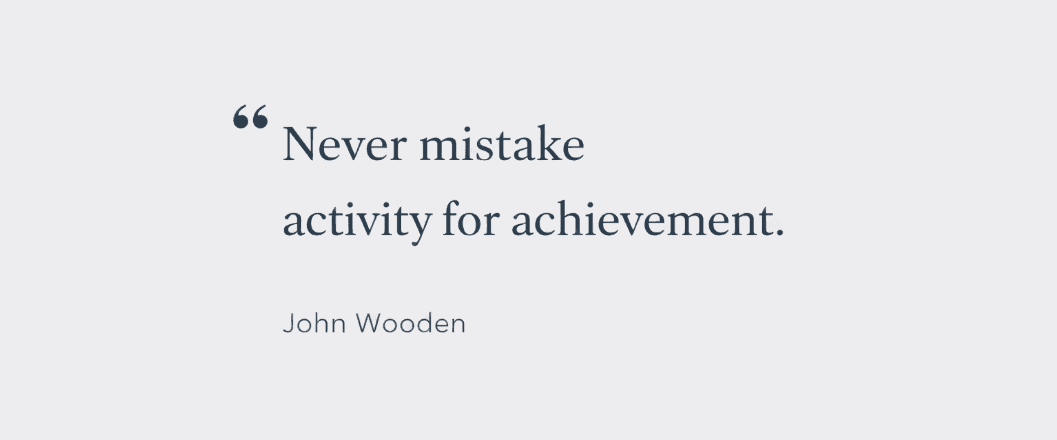
But efficiency is not the same as growth.
Efficiency means you can handle the same level of responsibility better. Growth means the level itself increases. If your responsibilities, exposure, and complexity stay the same for too long, your professional development slows, even if your performance remains high.
That is the comfort zone trap in the workplace.
The Hidden Psychological Impact of a Career Plateau on Professional Growth
Human beings grow through challenge. Not chaos. Not constant pressure. But meaningful challenge.
When work stops stretching you, your thinking adjusts to that lower demand. You rely on routine. You operate from habit. Your decision-making becomes familiar instead of expanding.
Over time, this affects confidence in subtle ways.
You begin to feel strong only within your current scope. Bigger opportunities may start to feel intimidating, not because you lack ability, but because you have not exercised that ability recently.
Career stagnation does not erase skill. It reduces exposure.
And reduced exposure slowly reshapes professional identity.
Are You Efficient or Are You Growing? The Career Plateau Self-Assessment
In other words, are you solving more complex problems than you were a few years ago? Are you closer to strategic decision-making? Has your level of responsibility evolved?
If your answers have not changed in a long time, you may be experiencing a career plateau, even if everything feels stable… I dare to add, especially if everything feels stable.
Stability ain't the problem. But without expansion, it limits long-term career development.
(Feel free to hang that quote in your bedroom, just make sure to tell your better half that Lizzy gave it to you, lol.)
A useful self-assessment here is to compare yourself to where you were 24 months ago and ask yourself three questions:
- Have the stakes of my decisions increased? - Am I regularly working on problems I have never solved before? - Has my visibility with senior leadership grown?
If the honest answer to most of those is no, that is not a performance problem. It is a career development signal worth taking seriously.
Moving on, let's tackle…
Breaking Out of a Career Plateau: Leaving the Workplace Comfort Zone
Organisations are designed to protect what works. If you perform well in a role, you become valuable in that exact position and leaders depend on that consistency. But the system's need for stability doesn't automatically support your career growth.
Overcoming a career plateau often requires intentional action. That may mean increasing your visibility, seeking more complex projects, upskilling outside your current job description, or having direct conversations with your manager about your career progression goals.
In other words, no one at your company is coming to save you from a career plateau. It's all on you to figure it out.
And if you continue delivering at the same level without expanding your range, the system will keep you where you are. Sadly, that's just the way the system works.
Have the Career Development Conversation Directly
Most professionals wait for their manager to bring up career development. That is a long wait. A more effective approach is to request a dedicated conversation separate from your regular check-in, specifically about your career progression. Come prepared with three things: where you are now, where you want to go, and one specific way you would like to stretch your responsibilities in the next 90 days.
This kind of directness signals leadership readiness, which is itself a form of career growth.
Seek Strategic Responsibilities Proactively
Visibility and complexity do not usually land in your lap. They come from volunteering for cross-functional projects, raising your hand for work that sits slightly outside your comfort zone, and building relationships with people whose work connects to where you want to go. Strategic responsibilities are how career development accelerates at mid-career, not just through formal promotions, but through the expanding scope that makes promotion a natural next step.
For a practical framework on how to build these habits into a full career plan, our guide on career growth and professional development planning in 2026 covers the step-by-step process in detail.
Start Moving Again: Your Career Plateau Recovery Roadmap
A career plateau is not a permanent condition. It is a signal that your current environment may no longer be stretching you. Probably, comfort has overstayed its welcome. And now, your professional growth depends on proactive decisions taken by you.
Here is a simple starting framework. Pick one action from each category and commit to it for the next 90 days:
Visibility: Share a professional insight with your team or on LinkedIn. Request a conversation with a senior leader outside your immediate team. Volunteer to present at an internal meeting.
Upskilling: Identify one skill directly connected to your career goals that you are not currently developing. Block two hours per week to work on it intentionally. Set a concrete milestone: a completed course, a delivered project, a demonstrated outcome.
Career Planning: Write down where you want to be in 18 months. Then work backwards and name the one responsibility, relationship, or skill gap that sits between where you are now and that goal. That gap is your next career development priority.
Because the real danger ain't failure. It's staying comfortable for so long that you stop imagining what is next.
For professionals ready to take this further, our guide on how to become a learning machine for long-term professional development covers the mindset and daily habits that keep career growth compounding over time.
Keep reading
- How to Develop Yourself Professionally When Your Calendar Is Working Against You
- How to Get Promoted at Work: The Internal Advancement Strategy Nobody Talks About
- What is Career Development: The Invisible Tax (And Why the Traditional Playbook No Longer Works)
- How to Plan a Career Change Without Collapse: What Dr. Deepak Bhootra Wants Every Professional to Know
More on Career Development: A Practical Guide
- Career Development Strategies: Most Professionals Mistake Activity for ProgressMost career development strategies are noise. Here's what compounds.
- Why You Don’t Need a New Job, You Need a Career InfrastructureStop job-hopping. Build the system that makes your success inevitable.
- The Navigation Gap: Why Hard Work is Failing the 2026 Professional.Stop driving in the dark. Bridge the Navigation Gap and reclaim career velocity.
- Q1 Is Done. Now What? Your Practical Reset Guide for a Stronger Q2This post breaks down how to reflect on your Q1 and move into Q2 with clarity.